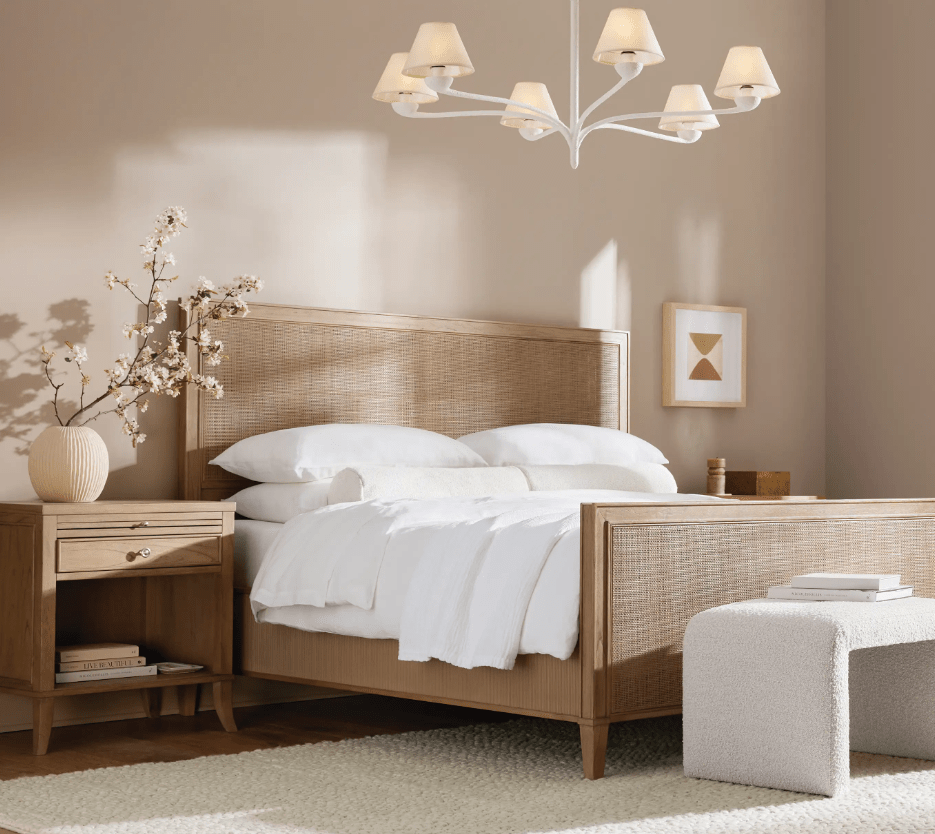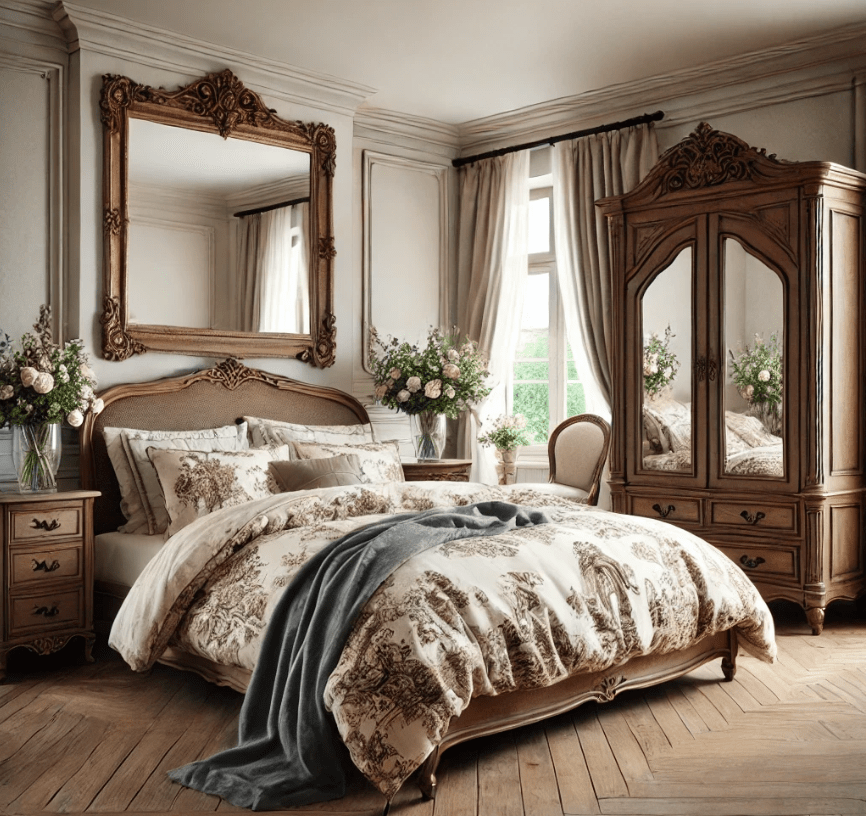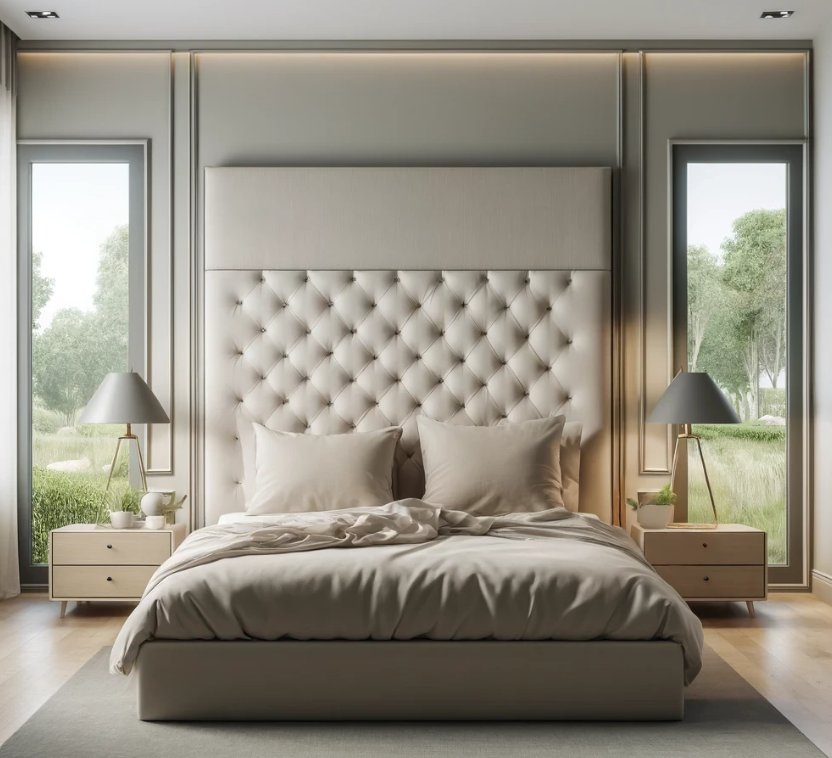


Nightstands may be relatively small pieces of furniture. Still, they can make a major difference in how a bedroom looks and functions. They visually frame the bed, support your bedside lighting, provide storage, and keep everyday essentials within easy reach.
Before buying one, measure the space on each side of the bed and compare the nightstand’s height with the top of your mattress. A nightstand that sits roughly level with the mattress is usually the easiest to use. You should also consider your actual nighttime routine. Someone who only needs a lamp and water glass may prefer a simple table. In contrast, someone who keeps books, chargers, medications, and personal items nearby will probably need drawers.
Classic Rectangular Nightstands
The rectangular nightstand is the most versatile and familiar option. Its straight edges relate naturally to the shape of the bed. At the same time, its broad surface provides plenty of room for a lamp, books, a tray, and a few decorative objects.
Notable feature: A practical shape with generous usable surface area.
Rectangular nightstands work especially well in traditional, transitional, contemporary, modern farmhouse, and hotel-inspired bedrooms. A dark walnut finish can feel warm and sophisticated, while a white, black, or navy finish creates a cleaner, more graphic look.
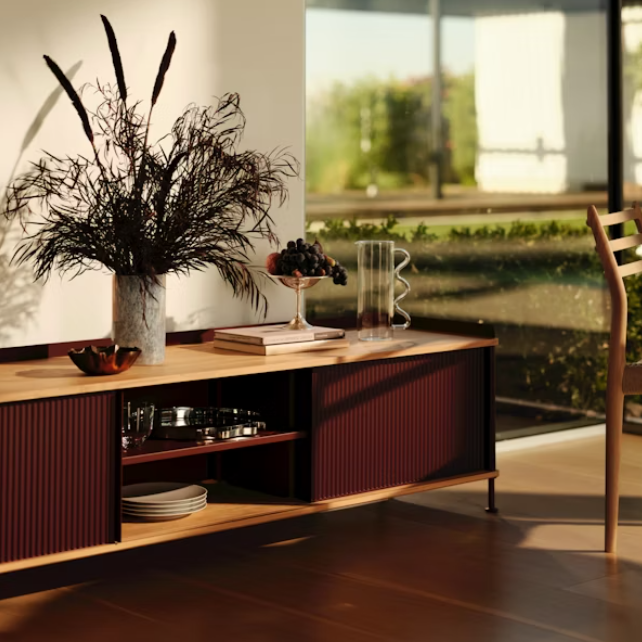
For a refined example, consider the Line Nightstand from Design Within Reach. It features a streamlined rectangular shape, discreet storage, and a louvered front that gives the piece a quiet architectural quality.

Line Nightstand – dwr.com
Round Nightstands
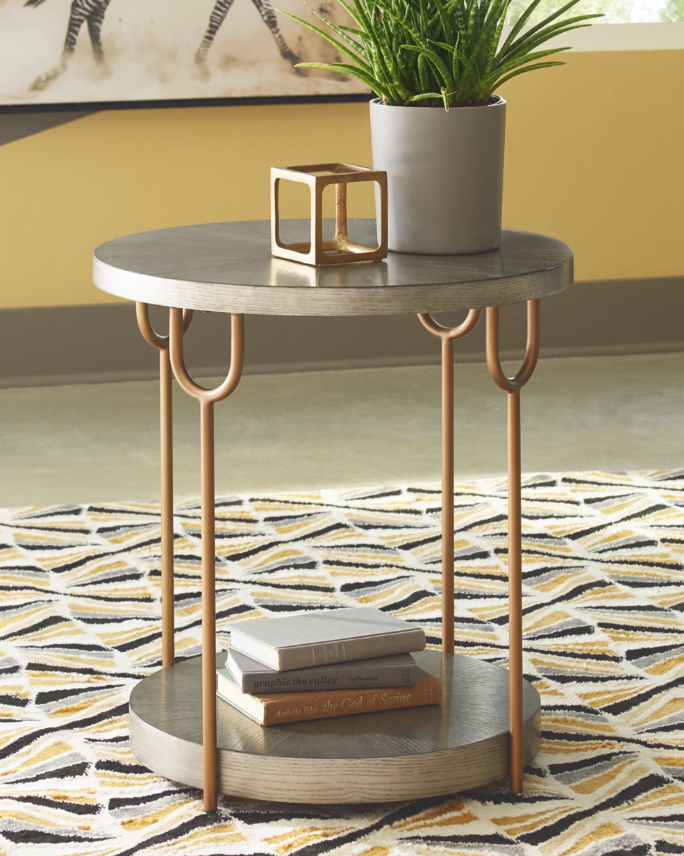
Round nightstands soften a bedroom filled with square and rectangular furniture. They can also improve circulation in a tight space because no sharp corners are projecting into the walkway.
Notable feature: A curved silhouette that makes the room feel softer and more relaxed.
This shape works beautifully in contemporary, organic modern, Scandinavian, bohemian, and mid-century modern bedrooms. A round table can be particularly effective beside a wide rectangular headboard because the contrast in shapes adds balance.
A distinctive option is the ST708 Round Bedside Table from 1stDibs. Its saddle-leather exterior and smoked-glass top give the rounded form a polished, contemporary appearance.

ST708 – Round Bed Side Table – 1stdibs.com
Multi-Drawer Nightstands
For clients who want a calm, uncluttered bedroom, I usually recommend a nightstand with two or three drawers. Separate compartments make it easier to organize charging cables, reading glasses, sleep masks, medications, remotes, and other small essentials.
Notable feature: Generous concealed storage that keeps visual clutter under control.
Multi-drawer nightstands can suit nearly any interior. Clean slab-front drawers feel modern, while carved fronts, decorative pulls, and traditional moldings create a more classic look.
The Lauki Bedside Table from Design Within Reach is a strong example. Its three drawers are built into a clean, minimalist profile, providing considerable storage without making the nightstand appear bulky.
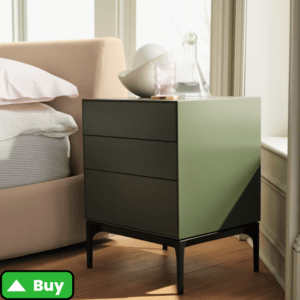
Lauki Bedside Table – dwr.com
Open-Shelf Nightstands
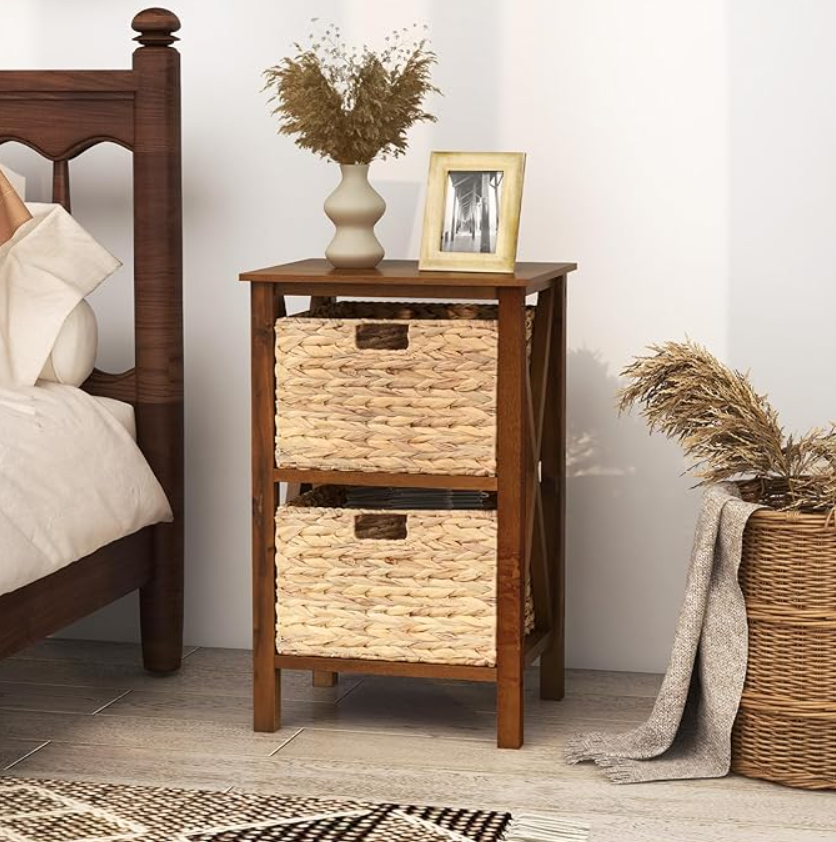
An open-shelf nightstand feels lighter and more casual than a completely enclosed cabinet. The lower shelf can hold a small stack of books, a decorative box, or a basket, while leaving the top free for a lamp and personal items.
Notable feature: Easy-access storage with less visual weight than a solid cabinet.
Open-shelf styles work especially well in coastal, Scandinavian, casual contemporary, organic modern, and modern farmhouse bedrooms. The shelf should be styled carefully so it does not become a collection point for cords and miscellaneous objects.
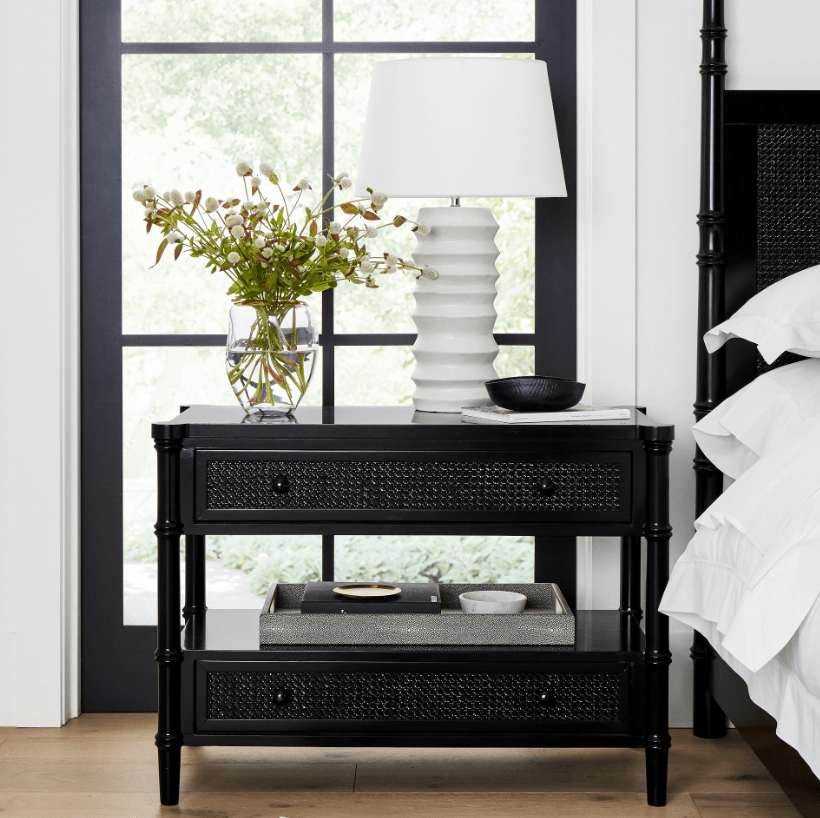
The Colonial Cane Two-Drawer Nightstand from Williams Sonoma combines enclosed drawers with an open lower shelf, giving you both concealed and visible bedside storage in one piece.
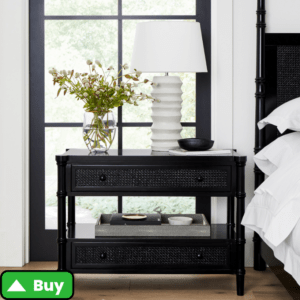
Cane 2-Drawer Nightstand (36 inches) – williams-sonoma.com
Narrow Nightstands
A narrow nightstand is often the best answer when a bed must fit between close walls, windows, closet doors, or other furniture. A slim piece can still be functional when it includes a drawer, shelf, or taller cabinet.
Notable feature: A space-saving footprint that fits into difficult or compact areas.
Narrow nightstands suit minimalist, urban contemporary, Scandinavian, modern, and small guest bedrooms. Pair one with a slim lamp or wall-mounted sconce so the limited top remains useful.
For a compact vintage solution, consider the Narrow Bedside Tables from the 1950s available through Chairish. Measuring just over nine inches wide, the pair can fit into bedrooms where standard nightstands would feel too large.
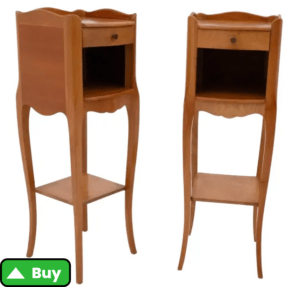
Narrow Bedside Tables, 1950s, Set of 2 – chairish.com
Extra-Wide Nightstands
A wide nightstand often looks more balanced beside a king-size bed, tall headboard, or large primary-bedroom wall. It can also provide enough drawer space to function as a small bedside chest.
Notable feature: A substantial scale with additional surface and storage space.
Wide nightstands work well in traditional, transitional, coastal, luxury contemporary, and hotel-inspired bedrooms. A large nightstand should be paired with a properly scaled lamp so the lighting does not appear undersized.
The Lewis Three-Drawer Nightstand from Williams Sonoma measures approximately 38 inches wide, giving it the proportions, surface area, and storage capacity needed beside a larger bed.

Lewis 3-Drawer Nightstand (38 inches) – williams-sonoma.com
Marble-Top Nightstands
A marble top immediately makes a nightstand feel more luxurious. It also provides a smooth surface for a lamp or water glass. However, natural stone should still be protected from moisture and acidic products.
Notable feature: Natural veining that makes every top slightly different.
Marble-top nightstands complement Parisian, Art Deco, transitional, neoclassical, contemporary, and modern luxury bedrooms. Marble paired with wood feels warmer, while marble combined with polished metal creates a more glamorous effect.
The Serenity Wavecrest Oval Nightstand by Hooker Furniture, available from Bloomingdale’s, combines a honed marble top with three soft-close drawers and integrated USB charging.
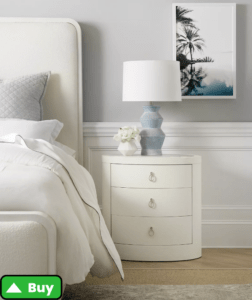
Serenity Wavecrest Oval Nightstand – bloomingdales.com
Glass or Acrylic Nightstands
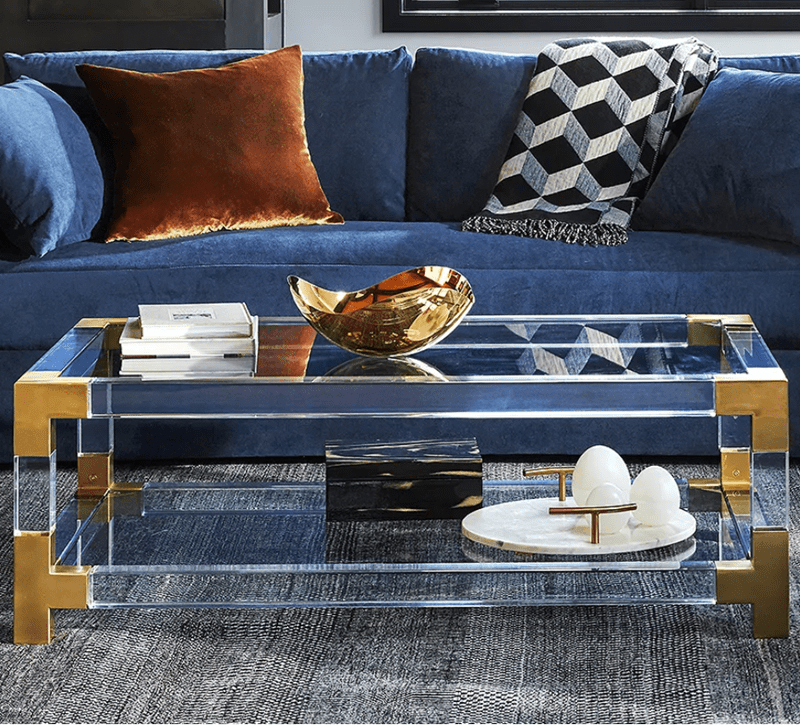
Glass and acrylic nightstands are helpful when you want the bedside furniture to feel visually light. Transparent materials allow more of the flooring and wall to remain visible, which can help a small bedroom feel less crowded.
Notable feature: A visually weightless appearance that keeps the room feeling open.
These pieces work best in Hollywood Regency, Art Deco, glamorous, contemporary, eclectic, and minimalist rooms. Keep in mind that glass and acrylic tend to show dust and fingerprints more readily than wood.
The Globo Side Table from Jonathan Adler combines a lacquered cabinet with acrylic cabochons, brass detailing, a soft-close drawer, and a lower tempered-glass shelf. It works especially well as a glamorous bedside table.
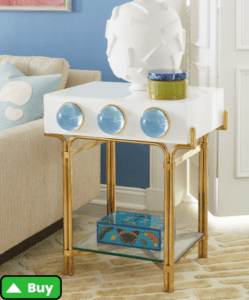
Globo Side Table – jonathanadler.com
Reclaimed or Salvaged-Wood Nightstands
Reclaimed and salvaged wood bring age, warmth, and texture into a bedroom. Variations in grain, knots, cracks, and color are part of the character rather than flaws that need to be hidden.
Notable feature: Natural variation that makes every piece feel distinctive.
This type of nightstand suits rustic, industrial, mountain, modern farmhouse, coastal cottage, and eclectic interiors. Pair the rougher wood texture with crisp bedding or modern lighting to prevent the room from feeling overly rustic.
The Polanco Closed Nightstand from Arhaus is crafted with fragments of salvaged Mexican ash and European ash burl, creating an organic surface with visible variations in grain, color, and tone.

Polanco Nightstand – arhaus.com
Woven, Cane, or Raffia Nightstands
Cane, raffia, grasscloth, and woven fibers add texture without introducing a strong pattern. They are especially useful in neutral bedrooms where the visual interest comes from layering different materials.
Notable feature: Tactile texture that makes a neutral room feel warmer and more dimensional.
Woven nightstands work beautifully in coastal, tropical, bohemian, grandmillennial, British colonial, and organic modern rooms. They pair naturally with linen bedding, pale woods, woven rugs, and ceramic lighting.
The Point Reyes One-Drawer Woven Nightstand from Williams Sonoma combines clean lines with a natural woven texture, making it a relaxed choice for a coastal or organic-modern bedroom.

Point Reyes 1-Drawer Woven Nightstand (32 inches) – williams-sonoma.com
Vintage or Antique Nightstands
A vintage nightstand can make a newly decorated bedroom feel more layered and personal. Older pieces often include carved details, aged brass, unusual proportions, or craftsmanship that may be difficult to find in new furniture.
Notable feature: Historic character that gives the room a collected appearance.
Vintage nightstands suit traditional, eclectic, grandmillennial, English country, French country, and transitional bedrooms. A matching pair can create symmetry, but two different vintage pieces can also work when their heights and visual weights are similar.
A Pair of Vintage Oriental Chinese Cream & Gold Leaf Painted Bedside Table Drawers from 1stDibs features a traditional painted finish, offering a decorative alternative to conventional bedside cabinets.
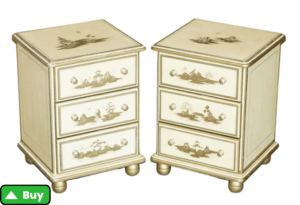
Pair of Vintage Oriental Chinese Cream & Gold Leaf Painted Bedside Table Drawers – 1stdibs.com
Nightstands With Built-In Charging
A charging nightstand includes electrical outlets, USB connections, cord-management openings, or a combination of these features. It is one of the most practical options for anyone who charges several devices overnight.
Notable feature: Integrated power that reduces cord clutter and keeps devices within reach.
Charging nightstands fit contemporary, transitional, modern luxury, family-friendly, and hotel-inspired bedrooms. Look for outlets positioned discreetly on the back or inside the nightstand so the technology does not dominate the design.
The Furologee Nightstand With Charging Station from Amazon includes two electrical outlets, two USB ports, storage drawers, and a long power cord.
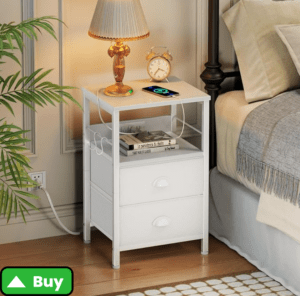
Furologee End Table with Charging Station, Nightstand – amazon.com
Choosing the Right Nightstand
The best nightstand should fit the scale of the bed, provide enough usable surface area, and support your real nighttime habits. A minimalist may be perfectly happy with a round table or transparent acrylic design, while someone who keeps several personal items nearby will probably appreciate two or three drawers.
Matching nightstands create a calm, symmetrical look, but they do not have to be identical. When mixing two different pieces, keep their heights and overall visual weights reasonably similar. Repeating a material, wood tone, metal finish, shape, or decorative detail will help the pairing look intentional.
Above all, prioritize stability, drawer quality, surface durability, and proper proportions. A nightstand may be a relatively small purchase compared with the bed, but the right one can make the entire bedroom feel more organized, comfortable, and thoughtfully finished.
FAQs
How tall should a nightstand be compared with the bed?
- A nightstand should generally be close to the height of the top of your mattress. A difference of a few inches is usually fine, but the surface should be easy to reach while you are sitting or lying in bed.
Do bedroom nightstands need to match?
- No. Matching nightstands create a balanced, symmetrical look, but mismatched pieces can make a bedroom feel more collected and personal. Keep them similar in height or repeat a shared material, color, shape, or hardware finish.
How wide should a nightstand be?
- The right width depends on the size of the bed and the available floor space. Compact nightstands between 15 and 20 inches wide work well in smaller rooms, while wider pieces can look more proportional beside king-size beds and oversized headboards.
Are drawers or open shelves better for a nightstand?
- Drawers are better for hiding chargers, medications, glasses, and other personal items. Open shelves create a lighter appearance and provide easy access to books or decorative baskets. Some nightstands combine both options for greater flexibility.
What is the best nightstand material for a bedroom?
- Wood is the most versatile and durable option. At the same time, marble adds luxury and woven materials introduce warmth and texture. Glass and acrylic can make a small room feel more open. Reclaimed wood works well when you want a rustic or collected appearance.

Bert Solivan
Bert is a passionate interior design enthusiast and home decor blogger, known for curating spaces that blend timeless elegance with personal style. With an eye for detail and a love for mixing classic and contemporary elements, Bert shares expert tips, inspiration, and product finds through his blog, helping readers create beautiful, livable homes that tell their unique stories.